

Supporting teat health year-round with advanced emollient science
15 May 2026
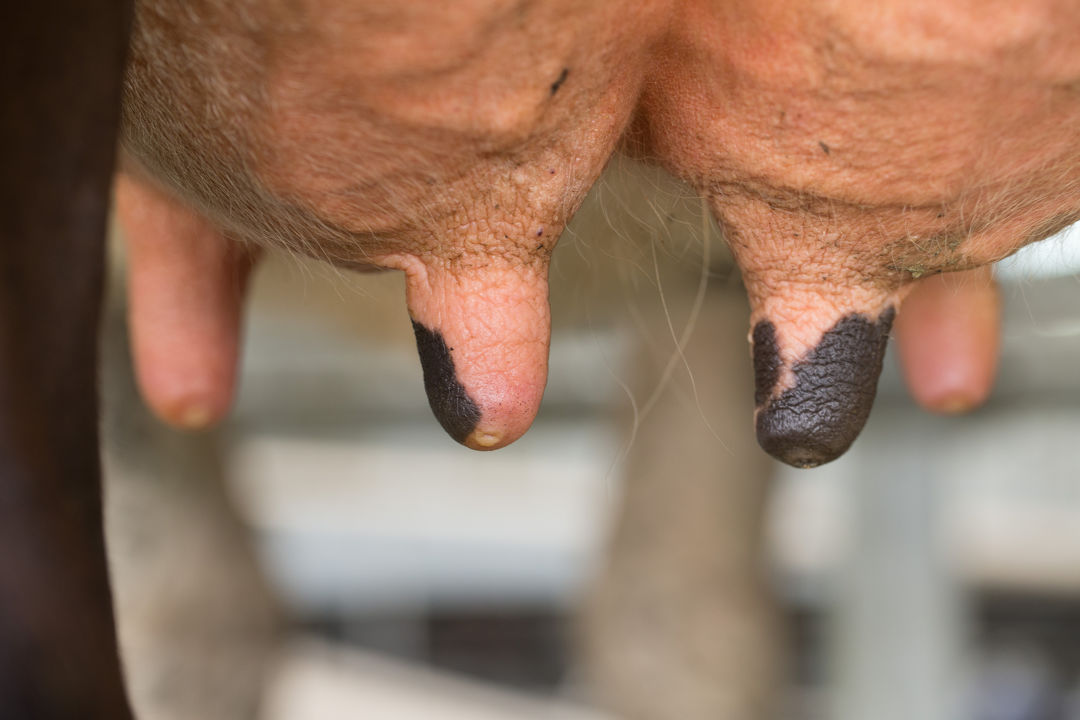
The formulation combines glycerin, sorbitol, Manuka honey, aloe vera, and allantoin to support teat skin integrity in challenging on-farm conditions.
“Active Teat Conditioner is an emollient enriched skin conditioner designed to boost teat spray performance by improving overall teat condition and resilience,” says Dr Calum Gordon, FIL’s Dairy Hygiene Development Chemist. “It’s particularly valuable during early lactation and any period where environmental stress is high.”
At its core, the formulation uses a dual-action moisturising system. Glycerin penetrates deeper into the skin layers, helping maintain internal hydration, while sorbitol provides sustained surface-level moisture retention.1-2 “From a chemistry perspective, they behave differently in the skin,” says Dr Gordon. “Glycerin works deeper in the skin structure, while sorbitol supports the outer layers. Together they hydrate across multiple layers of the teat skin.”
Active Teat Conditioner also includes a premium blend of Manuka honey, aloe vera, and allantoin. Manuka honey contributes natural antimicrobial activity due to its high methylglyoxal content.3 Aloe vera supports the formulation’s overall moisturising benefits.4 Allantoin is widely recognised for its skin-repairing properties, supporting tissue recovery. “The role of these ingredients is to support both protection and repair,”5 says Dr Gordon. “We’re not just maintaining moisture, we’re actively supporting skin health.”
Weather conditions year-round such as wind, rain, and mud, can strip natural oils and protective fats from the teat surface, leading to dryness, reduced elasticity, and chapping. “That’s why using an emollient, like Active Teat Conditioner, during exposure to these conditions is important, as teats can lose that protective fatty acid layer,” says Dr Gordon.
“When this protective layer is compromised, skin becomes dry, cracked, and more vulnerable to irritation and pathogen colonisation,” says Dr Gordon. Over time, this can increase the risk of infection and mastitis. “A study in 2024 of 2,670 dairy cows found that cows with both dry teat skin and lesions had five times the odds of clinical mastitis. This highlights the importance of maintaining skin condition.”6
Rising somatic cell count (SCC) across a herd is a clear indicator of increased mastitis and infection levels. While mastitis has multiple risk factors, teat skin condition is one that should not be overlooked. "If SCC is trending upwards, it's worth assessing whether teat condition is being adequately supported," says Dr Gordon. "Maintaining skin integrity through consistent use of Active Teat Conditioner helps reduce one key pathway to infection."
While often associated with winter, FIL emphasises that teat skin is at risk year-round. “It shouldn’t be used reactively,” says Dr Gordon. “It’s a preventative treatment to maintain teat condition through all weather conditions. Good teat health sets the herd up to succeed.”
By strengthening the skin barrier and supporting hydration across multiple layers, Active Teat Conditioner plays a key role in improving teat condition and reducing mastitis risk through proactive, science-led dairy hygiene management.
1 Fluhr, J.W., Darlenski, R. & Surber, C. (2008). Glycerol and the skin: holistic approach to its origin and functions. British Journal of Dermatology, 159(1), 23–34.
2 Muizzuddin, N. et al. (2013). Effect of seasonal and geographical differences on skin and effect of treatment with an osmoprotectant: Sorbitol. Journal of Cosmetic Science, 64(3), 165–174.
3 Mavric, E. et al. (2008). Identification and quantification of methylglyoxal as the dominant antibacterial constituent of Manuka honey. Molecular Nutrition & Food Research, 52(4), 483–489
4 Dal'Belo SE, Gaspar LR, Maia Campos PMBG. Moisturizing effect of cosmetic formulations containing Aloe vera extract in different concentrations assessed by skin bioengineering techniques. Skin Research and Technology 2006;12(4):241–246.
5 Araújo, L.U. et al. (2010). Profile of wound healing process induced by allantoin. Acta Cirúrgica Brasileira, 25(5), 460–466.
6 Velasquez-Munoz, A. et al. (2024). An observational study to investigate the association of teat skin condition with clinical mastitis risk. JDS Communications, 5(5), 455–459.
Back...